Every rug arrives with its own document. Not a label. A record.
Most rugs sold in Europe come with nothing or with a certificate that says “handmade” and nothing else. That word alone proves nothing.
What’s on it
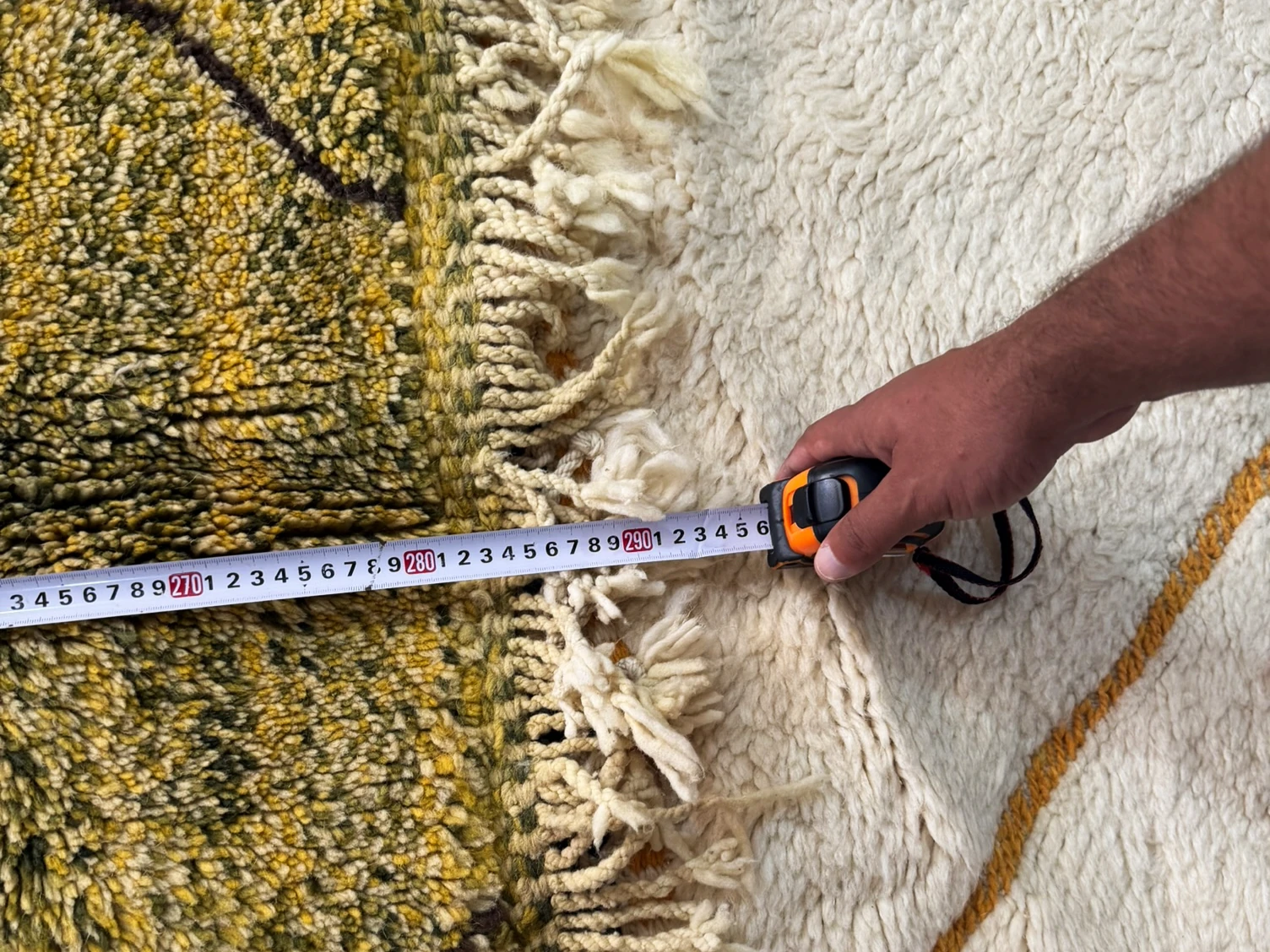
Origin region. Dimensions to the centimetre. Weight. Knot density per square metre. Wool composition. The cooperative or the weaver it came from. The date it entered our hands.
Signed by VOLZAR.
These are measurements, not adjectives. A rug that weighs +/- 4.5 kg per square metre is not the same object as one that weighs 1.4. A buyer who knows that can compare. One who doesn’t is buying on trust alone.
Knot density and weight are measured on the piece, not estimated from a category.
Why it matters
Handmade wool rugs hold their value. Machine-made copies don’t. The difference is invisible in a photograph and obvious in the hand but only if you know what to look for.
The certificate puts the technical facts in writing, so the piece can be valued, insured, resold or passed on without relying on memory or on our word.
For professionals, it also means you can put a document in front of a client instead of a claim.
Who issues the certificate?
VOLZAR. We measure each piece ourselves and sign the record. It is a seller’s declaration, not a third-party laboratory certification — and we say so plainly.
What is knot density and why does it matter?
It’s the number of knots per square metre. Higher density means finer work, more wool, more hours, and a piece that wears better over decades.
Can the certificate be used for insurance?
It gives an insurer the technical detail they need dimensions, weight, composition, origin. Whether they accept it depends on your policy.
What if I resell the rug?
The certificate travels with the piece. It’s the record of what it is.
Is the wool tested?
Composition is verified at source with the cooperative. We don’t claim natural dyes unless the piece has been confirmed as such.